Thursday, 17 February 2022

Second Best


It's been said that if you put something extremely sweet in your mouth, it'll make whatever you follow it with taste a thousand times more sour.  So if you stuck a spoonful of sugar on your tongue, then followed it with a bitter lemon, your face would turn inside out with the sheer pain of its tartness.  

I bring this up as a caveat before I write anything about Craven Arms.  You have to remember that I had just arrived in the town after a morning in the beautiful, charming Church Stretton.  I'd rambled over hillsides and wandered picturesque streets and enjoyed the beauty of nature.  I was now somewhere else.  That place might not be the most wonderful place on earth, but coming right after Church Stretton, its flaws seemed all the more apparent.


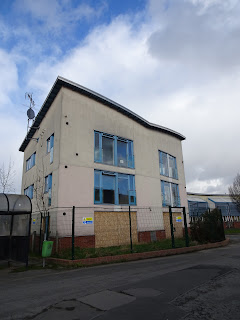
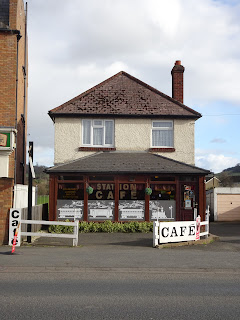
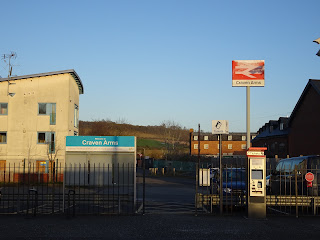
I will say that walking out of the station to find an abandoned block of flats doesn't fill you with the best first impression.  The ground floor was boarded up, and I could see the vacant apartments inside.  I'm not sure what happened here - was there a fire? - because the development looked new and interesting, with matching terraced homes nearby and solar panels on the roof for the full green effect.  I passed through to the main road, past a cafe called - yes! - Station Cafe (presumably pronounced Station "Caff") and walked towards the town centre.


For centuries, there wasn't really much round this way.  There were a couple of hamlets, Newton and Newington, but they were barely worth talking about.  The main feature was the Ludlow to Shrewsbury road following the gap in the hills on its way to Church Stretton and beyond.  At the turn of the 19th century, however, a coaching inn, the Craven Arms, opened on the road for travellers.  When the railway followed a few decades later, they passed up naming the station after one of the generically titled villages in favour of the far more famous inn.

As happened all across Britain, the arrival of the railway meant the arrival of people, and a town grew up around the station to service the passengers.  Craven Arms is, therefore, a town named after a railway station named after a pub.  

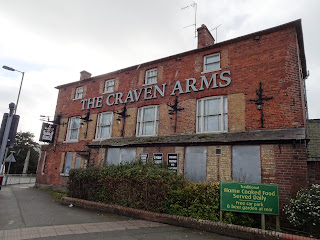
Of course, this was catnip to me; I had to go to the Craven Arms in Craven Arms.  That's a properly historic reason to visit the pub.  Even Michael Portillo would find time to visit the pub that gave the town its name, in between biscuit factories and looking smug.  I ended up disappointed.


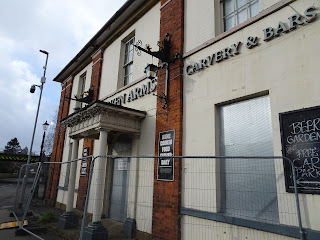
The Craven Arms pub stands on a prominent roundabout in the centre of town and it is definitely, comprehensively, closed.  I did some digging around to find out what happened.  In February 2020 they posted on Facebook:
Due to flood damage the pub will be closed from 7pm tonight until Monday, sorry guys!!!

A follow-up post appeared on the 4th March:

Heyyy all just to keep you updated we now have heating again but we are still waiting on the coolers to be done 😞  fingers crossed will be this week

On the 20th March 2020, the government closed all the pubs and put us in lockdown.  I imagine at that point the licensee thought "stuff this for a lark," packed up their goods and disappeared into the night.  I don't blame them to be honest, but it did leave a big hole in the middle of town.  If you're the town of Craven Arms, it feels wrong that the pub that gave you its name is no more.  It was sad and also ominous; a real ravens leaving the tower moment.  


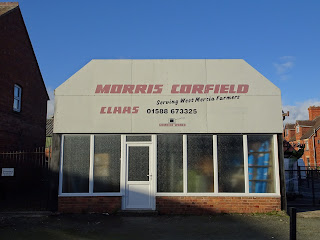
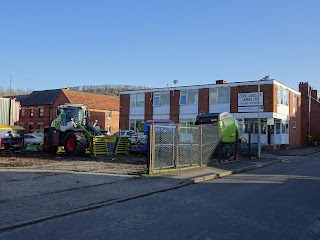
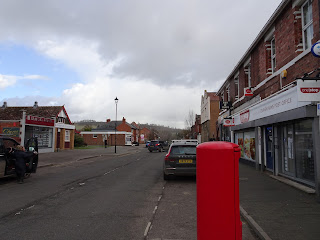
I turned back to have a walk round the centre.  The difference between a historic country town (like Church Stretton) and a more modern one like Craven Arms was glaringly apparent.  It wasn't just the buildings, or the town's layout, spread over a series of straight roads that intersected at right angles.  It was the difference between small, individual farming and more comprehensive, more industrial agriculture.  One back street was dominated by a compound for selling farm machinery.  Huge tractors and diggers and harvesters towered over the pavement.  Meaty, hard, lumps of metal, made for churning up ground in huge quantities, made to carve and slice through crops.


On one corner, a dull modern office building was home to Euro Quality Lambs - a company that promised to deliver "high quality lamb carcasses throughout the UK and Europe".  This was the brutal reality of livestock farming.  This wasn't fluffy ickle sheep prancing over hillsides, this was an animal to table processing centre.  


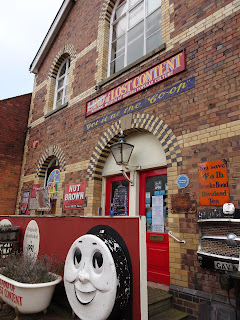
I walked away, wondering when the lambs will stop screaming, and found the Market Hall.  That was another difference from Church Stretton - the Victorian practicality of putting the market under cover, making it permanent, able to operate all week instead of one special day.  It's no longer in use for that purpose however.  Instead it's been transformed into the Land of Lost Content.


Owner Stella Mitchell has built up, over the decades, a comprehensive collection of... stuff.  There's no real other way to describe it.  Packaging, signage, clothing, toys, general miscellany - it's spread throughout the market hall for you to take in.  The delightfully retro website - is that part of the collection? - has its full history and mission statement.

I didn't go in, for two reasons.  The first was that you were meant to book ahead or, alternatively, call a number on the door for admission.  I'd not booked and my social awkwardness couldn't cope with the idea of asking someone to open up a museum for me.  I'd have felt obliged to walk round every inch of it so that I didn't let the owner down.

The second reason I didn't go in was the charge was eight quid.  Am I cheap, or does that seem like an awful lot of money to look at someone's collection?  I couldn't bring myself to pay for it so I walked away in search of Craven Arms' other big tourist attraction.


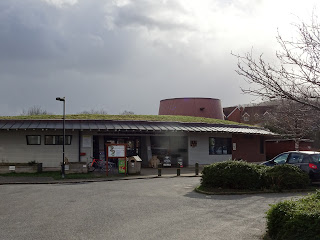
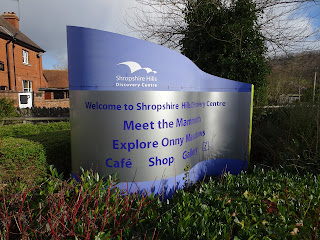
I'm sure the Shropshire Hills Discovery Centre has a purpose.  I'm sure it has a mission statement and an ambition.  I'm not quite sure what it's for.  It's a nice enough building, very Millennium Project-y, with all the eco credentials that come with that.  It had a cafe and a gift shop, selling bird feeders and local gin and copies of Precious Bane, a book set in the local area which I have read and remember being absolutely dreadful.  


It also had an exhibition.  Costing five pounds to get in.  And once again, I was forced to say "nope".  There was the promise of a film beyond the sign, and historical information, and a recreation of an Iron Age hut, and a replica of a mammoth found in the local area - not the actual skeleton itself, because that's at the Natural History Museum.  A replica.  For five British pounds.  Yes, yes, support the arts, support our nation's history, support the culture, but that seemed to be a little bit piss-takey for me.  I used the toilets - they were free at least - and left the building behind a party of school children.  I imagine school trips were what kept the place going.  I certainly couldn't imagine many people driving here specifically to visit.


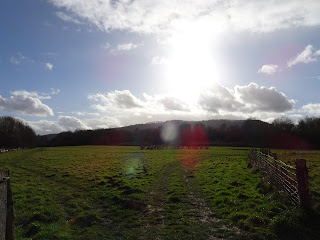
Out the back of the centre are the Onny Meadows, an expanse of walking paths and landscaping based around the River Onny.  February probably isn't the best time of year to visit the meadows, and let's be honest, I'd just romped over National Trust hillsides so this was a little underwhelming, but at least it was pretty and quiet and gave me a bench to sit and eat my sandwiches.

The question was, what to do with the rest of the afternoon, until my train at five o'clock?  I had a couple of hours to kill now.  


Be honest; you knew that was coming.

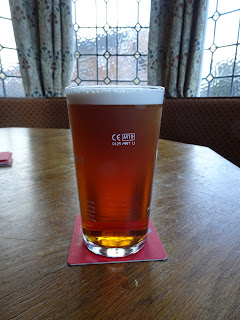
There was a big pub near the Discovery Centre that advertised rooms and good food and beer.  This last one was a lie; their options were Carling, Worthington's, and a lot of lagers I had never heard of.  I settled for a Worthington's and took a seat at an octagonal table in the window.  The table was sticky from being continually sprayed with antibac.  Above me was a line of fairy lights and the world's tiniest disco ball, barely a couple of inches in diameter, and not even slightly festive.  There was a dance floor, with pale blue LEDs surrounding it, and an England flag hanging from the ceiling.  The flag had a Sports Direct logo in the corner.

The only other patrons were two middle aged ladies and their elderly mother who were drinking coffee on the other side of the room, plus the boyfriend of the barmaid, who sat at the end of the bar fiddling with his phone while she served then joined in conspiratorial gossip when she was free.  I drank my pint and left long before the burger and a pint offer kicked in at 5:30.


Now what?  I walked round the town centre streets again, up one road, down another.  I passed the only other pub and it looked somehow worse than the one I'd just left.  The window of the general store advertised a Flicks in the Sticks event at Aston on Clun village hall: a showing of No Time To Die.  Obviously I applauded Aston on Clun's taste in movies, while internally sniggering at the word Clun.  I seemingly had only one place left to go.  Shopping.


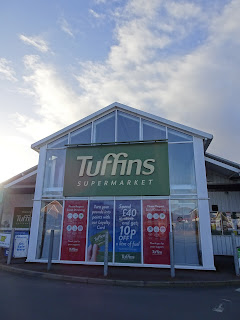
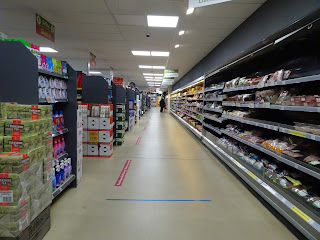
There isn't an Asda in Craven Arms, or an Aldi, or a Morrisons.  There's not even a Tesco Metro.  Instead the locals shop at Tuffins, a local supermarket with stores here and in Welshpool.  I went inside for a poke around, past a sign that informed me that the Co-op had purchased their supplier and so they'd be selling their products but "We are proud to be an Independent Supermarket and will NOT be turning into a Co-op".  


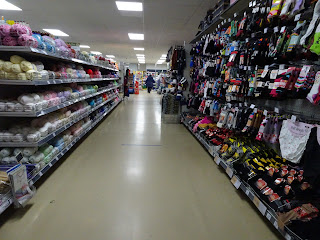
You know when you go on holiday, and you end up in the local supermarchĂ©, and it's all familiar and yet at the same time, deeply weird?  That was what it was like wandering round Tuffins.  It sort of made sense as a supermarket - there was milk and bread and orange juice - but the brands were odd, and the layout was strange.  There was a garden centre next to the bakery.  There was an aisle that sold balls of wool on one side and children's underwear on the other.  It had a charmingly ramshackle feel to it, like it had started as a tiny shop but they'd kept buying the buildings next door and knocking through and then trying to find stuff to fill it with.


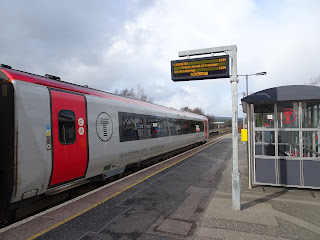
As I was so close to Wales - this part of England is known as the Welsh Marches, a historically fuzzy borderland between the two countries - I picked up a bara brith for the BF, plus a copy of Viz for the train journey home.  It was nearly four o'clock when I left the store and I felt like I had exhausted Craven Arms.  It was shutting up shop.  I walked back to the station - the cafe was closed now - and took a seat on the cold platform to watch the sun start to go down.


Craven Arms wasn't a bad town, don't get me wrong.  I bet lots of people love it.  You're still in those wonderful hills, after all, and there's places to shop and eat.  There was a charity bookshop that was selling some of the most bizarre and lurid paperbacks I've ever seen, and a new surgery building that looked modern and efficient.  You've got a station with plenty of trains.  It just wasn't for me.  I was far more of a Church Stretton chap.  


Monday, 14 February 2022

Church Walks


I am a full, card-carrying member of the swathe of humanity labelled "Generation X".  We're the last generation to have a handful of tv channels and the first to have computers in our home; we're the generation that embraced SAW and techno and grunge and Britpop.  We grew up with Spielberg films and E-numbers and nothing to do.  We're a generation that is, above all, riddled with cynicism and disdain and an ironic distancing of every experience.  It was something we developed to cope with Thatcher and Reagan and AIDS and the threat of nuclear war hanging over our heads and all our parents getting divorced.  We became tough.

I suffer from this affliction more than most.  Every joyous event happens to me through glass.  I watch it from outside, unwilling to commit until I've decided if this is something I will allow myself to enjoy.  Every unfiltered moment of happiness is met with pursed lips; every emotional outpouring is greeted with a raised eyebrow.  I am, in short, a nightmare.

It means that when I am told something will be beautiful and great, I'll blow my cheeks out dismissively and say to myself, "we'll see about that".  I arrived in Church Stretton with my cynical faculties at maximum.  I'd read, prior to arriving, that this was a lovely place.  A gem in the Shropshire countryside.  "Nicknamed Little Switzerland", one website told me.  Yeah, yeah, I thought.  

I left the station and cracked a smirk of superiority.  Beyond the platform was a rough, badly tarmacked road, cracked and broken, lined with garages and workshops.  Cars and vans broached the pavement while at the end of the street was a fast, unlovely A-road.  Charming?  I thought.  This could be anywhere.

I crossed back over the railway line, past the town sign informing me it was market day, and something hit me.  Perhaps it was the fine buildings, grand but not ostentatious; perhaps it was the steep hills rising up to form a picturesque backdrop.  Perhaps it was the ginger cat that stepped away from the verge to beg for a stroke at my feet.  Something infiltrated my brain and made me think, "oh no.  This place is great."


Church Stretton, it turns out, lives up to its reputation.  It's a thoroughly charming little market town, threaded around a couple of main streets, that oozes personality.  It has a thriving community of residents; there was a two metre long notice board outside the post office, groaning under the weight of notices for support groups, events, clubs.  Women's Circle?  Sequence dancing?  Gardening club?  They were all here.


The High Street passed through an intriguing mix of buildings and styles.  Most of the stores were occupied, which is a rarity in 2022, and small side alleys begged to be explored.  The market square was filled with half a dozen stalls selling fruit and veg and cheese and soft furnishings - no knock off designer gear or dirt cheap kids rugs with a rough approximation of Peppa Pig on them.  I ducked down one and found the parish church in its square of graveyard.


The street on the other side brought a library, with a visitor's centre, and a series of neat cottages.  A woman came down the path of one as I passed, yawning: "Ooh, you're tired!" she laughed.  She was dressed in serious country wear, stout boots and thick jumper and a gilet.  I went to the bottom of the street, to "Cunnery Road" - a name that sounds like a particularly filthy euphemism - and doubled back onto the bottom of the High Street.


It wasn't perfect.  The shops were mainly designed for expensive browsing rather than everyday purchases.  There were more antique shops than anything else; the town's one shoe shop had a sign in the window explaining the owner was retiring, and I didn't see anywhere that sold everyday, normal clothes.  You could've got yourself a nice silk scarf but if you wanted a new pair of pants you were out of luck, unless you went to one of the two wool shops and bought the yarn to make your own.  The hardware store had a window filled with ironwork statues; I doubt you'd have been able to get a drill bit there.  There were food stores on the main drag but they sold artisan, organic, gourmet foods, the kind of shop that has a lot of shortbread for some reason.  There was a supermarket, and you'll be unsurprised it was a Co-op, not one of those vulgar Tesco Metros, and it was tucked away round the back with a car park and a bus stop where you couldn't see it.


It's easy to be beautiful when you have money.  It's easy to be charming when you don't have to really work at it.  This is not to demean Church Stretton at all; I was absolutely taken with it.  But the people here had disposable income and leisure time to enable them to make their town as pretty as possible without relying on cash-strapped councils or overworked volunteers.


Down a back road, past an abandoned 1930s garage that managed to look picturesque even in its derelict state, and round a village green with wide oak trees placed on it.  A sign informed me that the three oaks commemorated the reigns of Edward VII, George V and George VI; Edward VIII was discreetly absent.  There was a small seating area and I parked myself for a drink of water and a pasty from my bag.  

Normally, of course, I'd walk to my next station from here.  But Craven Arms was seven miles away.  There were two ways to get there; either I could follow the A49 through the narrow gap in the hills - a busy road with few pavements - or I could walk to the top of the ridge and follow that over the top.  Neither route seemed appealing so I'd be getting the train.  It meant that I'd exhausted Church Stretton's attractions.  I'd gone in one shop, a kitchen store kitted out like a traditional village shop with high wooden shelving, and one of the owners had fussily started playing with a display of hand-made cards near me in case I shoved a pair of tongs in my backpack without paying.  Quite unwelcoming.  There were cafes, but they were either busy or more foody than I wanted, not the kind of place you can sit with a single cup of tea..  And the pubs weren't open yet.


I checked my Ordnance Survey app and decided I could go for a little countryside walk, just enough to take me round the town, just enough to fill the time.  I headed up the hill past discreet villas tucked behind CCTV guarded fences, all built high enough to enable their living rooms to have a great view down the valley.  There was a small gate (warning: busy road) and then I was walking towards Carding Mill Valley.


A cold wind barrelled down through the peaks and hit me square in the face as I followed the road.  Either side of me, sheep nuzzled at steep hillsides, the grass too thin too properly cover the rock below.  Bare trees shook as each gust struck them.  My face became pink and pinched; I felt every chilly blast.  


I realised, as I walked, how much I had missed this.  Months of being locked in the house, moving from room to room, barely going out, had made me into a hermit.  I am a total homebody; I love my little house, and I'm perfectly satisfied with the internet and a telly to keep me company.  I hadn't really missed going out.

Now though; now I was feeling it throughout my body.  The thrill of exploring again.  The excitement of visiting a strange place, of walking down alien footpaths and not knowing where they'd take me.  Seeing sights and views that were different to my own corner of the country.  A smile spread across my face.  My cynicism was really getting a beating.


I paused at the visitor's centre to use the coldest toilet in the western hemisphere then took a small side path away.  There is a steep plateau here, the Long Mynd, which has a path running its length; it gives amazing views and is well worth the effort.  I wasn't dressed for a hike - I was wearing jeans, for goodness' sake - no matter how tempting it was to walk up and up and up.  I took one final glance at the sun bouncing off the hillsides.


Considering it was February, the path wasn't too muddy; the weather had been relatively good lately so the odd puddle was easily avoided.  It hugged the side of the hill with grazing fields rising above me and then a sharp plunge downwards into woodland below.  I had it to myself, but a mess of bootprints in the muddier sections showed me I wasn't wandering off into the unknown.


The path reached a low point beside a reservoir spilling its contents through a sluice gate and down into a stream below.  I paused on the bridge for a moment to watch the water then followed it across, past an abandoned sheep pen, and to the bottom of a slope.  I looked at it with a mix of confusion and disappointment.  I was meant to go up there?


I scrambled.  The surface was rough and loose; stones slipped from underneath me as I pushed on.  I didn't slip but it wasn't dignified.  I reached the top, sweating, short of breath, and paused for a drink.  At least, I thought, it would be all downhill from here.  And the view was great.  I could see Church Stretton below me, suddenly tiny.


The path here seemed a lot less used; I guessed that most people took the other branch alongside the reservoir, the one that traversed the hills properly.  There was a single abandoned shoe liner, the type you put in your walking boot to make the walk softer, dumped when it had rubbed its owner too much.  A sheep haughtily watched me approach, rightly judging that I was neither a danger nor bringing food.  I was only an irritation.


There was another branch in the path and I sighed.  A check of the OS Maps app again; yep, I wasn't following the nice clear way in a straight line.  Instead I made my way down a steep slope through a thick carpet of fallen leaves.  My feet sank into them every time, a full inch of compost-to-be, and I clung to the fence as I walked to try and avoid sliding down.  At the bottom, the leaves had gathered against the fence even more deeply.  It was like walking through dun-coloured snow.


I shadowed the fence.  Below me the hill dropped away into woodland, but here the trees were thinner, more open.  It was still winter and so the bright sunshine could reach me through their bare branches.  However, the openness also meant less protection.  I reached a sprawl of fallen trees.  They'd collapsed in the winds and crushed the fence beneath them, their roots exposed, a gaping hole where they'd once stood.


Climbing over them directly would've been too difficult, so instead I pulled myself up the bank to go round.  Finally, the slip happened, the one I'd been expecting throughout the walk; I clattered down on my knees into the soft mud.  It left brown marks all over my trousers, and dirt on my hands and under my fingernails.  I muttered swear words to myself, while a part of my brain wondered what I'd do if I fell properly here on the hillside and broke something.  Was it even worth calling for an ambulance out in the middle of nowhere?  I may as well curl up and wait for the sheep to eat me.

I stopped, suddenly furious.  I'd reached the point where the path turned down, towards the town again, and I needed to pass through the fence.  I'd expected a gate or a stile but there was nothing.  The Shropshire County Council arrows cheerily pointed down the hill but someone had "helpfully" repaired the fence here, blocking it up completely, and with a string of barbed wire over the top.

There was a narrow point in the corner where the fence hadn't quite reached.  I hoiked one leg over, but stumbled a little with the change in levels, and toppled backwards; instinctively I reached out to grab something.  The thing I grabbed was the barbed wire and a spike plunged into the palm of my right hand.  I let out a single Freddie Uncle Charlie Katie and pulled my hand away.

Luckily, we live in a pandemic world.  I had a bottle of Purell in my pocket and I squirted it into the bloody hole, feeling the sharp sting as the alcohol worked on the wound.  It had stopped bleeding by the time I stumbled and rolled and clattered my way down the hill and onto the road again, emerging between two houses and no doubt looking like a dishevelled mess.  I hoped nobody had been watching my undignified descent from their back window.  If I end up on You've Been Framed, I want that £250, thank you very much.


The road back into town wasn't as charming as Church Stretton's centre, a lot of boring detached homes and bungalows behind hedges.  After a couple of steps my Fitbit brrrd on my wrist; I'd hit 10,000 steps.  I wasn't surprised.  (The app also claimed I'd walked up 67 flights of stairs, which makes me think it's not really designed for country walking).  By the time I'd reached the centre of the town the pubs had opened, but I felt too much of a state to visit them.  Instead I walked straight to the station.


There was a bench under the footbridge and I tried to make myself more acceptable to polite society.  I wiped myself down with a Wet One.  I sprayed some deodorant and some Hugo Boss.  I brushed off the worst of the dirt.  By the time the train arrived to take me to Craven Arms, I was as presentable as I'm ever going to get.  Which still isn't great if I'm honest.  (Self-deprecation, that's another Gen X trait.  I'm a clichĂ©).  


Tuesday, 25 January 2022

The Baltic State

When I moved to the northwest in 1995, I would get the train from Ormskirk into Liverpool.  The Merseyrail map had, down near the bottom of the Wirral Line: Eastham Rake - Under Construction.

A couple of years later, the map was updated again, and there were two new Merseyrail stations stations marked as Under Construction: Conway Park and Brunswick, plus Wavertree Technology Park on the City Lines.

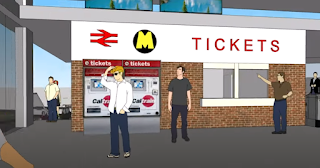
It meant that I got the impression that Liverpool's railway network was a constantly developing hotbed of excitement.  It turned out this wasn't true.  However, we do seem to be in the middle of another purple patch of new station thrills.  Maghull North opened a couple of years ago, Headbolt Lane is under construction, and the Skem and Borderlands extensions are glacially progressing.  And then we got some news about the new city station, on the site of the long closed St James.  A consultation about the name, plus a whizzy fly through video.

My first impression?  Wow.  A station fan in the United Kingdom has a certain in-built sense of disappointment.  We're used to being promised a fancy new line with beautiful architecture then getting a single stub with a bus shelter on a platform.  We're used to getting promised a massive high speed railway that will transform the nation then getting one branch lopped off and a new station in Manchester that is badly designed.  

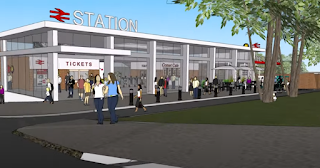
Now all this is caveated with the design is not yet finalised and this video is indicative but that's a proper station.  I had been afraid that we would get a repeat of the rather disappointing glasshouses that have shown up at Maghull North and Headbolt Lane.  They're little triangular sheds that house the ticket hall and nothing more.  Here, Merseytravel and the Liverpool City Region authority have made a large, spacious building.

This is, after all, a city centre station.  More than that, it's probably the first station to be proposed that will encourage travel within the centre.  At the moment, few people would get a Merseyrail train from, say, Moorfields to Central; by the time you work your way from the surface to the platform, ride the train, then come back up, you may as well have walked.  

The new station, however, is in a spot that is just that bit too far to walk.  There's a reason why the Baltic has been slow to develop along with the rest of the city - it's too isolated away from the rest of the city centre.  It's almost a mile from Central on foot, and that's a walking route along busy roads and dodgy backstreets.  Putting a new station in this spot would open up travel for just one or two stops in a way that doesn't currently exist.  

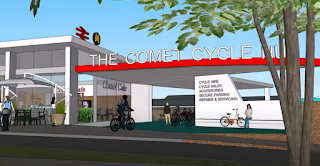
The inclusion of a cycle hub adds real value to the site, making it a public transport interchange on a few levels.  Presumably they'll also stick in a spot to hire those whizzy e-scooters that are constantly being driven on the pavement all over Liverpool.  With any luck they'll also tame the roads around the station - Parliament Street is six lanes here; not exactly a pedestrian and cycle friendly environment.  


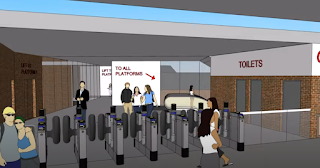
Head inside and you can buy tickets for CalTrain, San Francisco's commuter rail network, which is very handy I'm sure you'll agree.  Of course I'm joking; the CGI used is rudimentary but does the job, and you just have to ignore the blank unstaring faces of the commuters.  There's also a cafe in the ticket hall, with some tables set outside, which I'm sure will definitely happen.


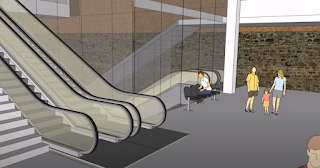
It was when the flythrough went through the ticket barriers that I realised Merseyrail were taking this station seriously.  The station has escalators.  Escalators are expensive to install and maintain and so often get value engineered away - Conway Park lost its escalators before it was built and ended up with lifts only.  A station in a city centre should absolutely have escalators.  You want to whizz people to and from the platform as quickly as possible.  


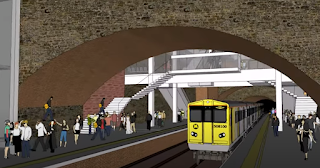
At platform level, there's a pleasing mix of old and new, the 150 year old cutting walls complemented by new steel and glass inserts.  It's a bit like Liverpool South Parkway, the last really big project Merseytravel dealt with, right down to the over-track waiting area.  


The final piece of the puzzle is what to call it.  There are three options:
  • Liverpool Baltic
  • Liverpool Parliament Street
  • Liverpool Riverside
Leaving aside the pointless "Liverpool" prefix (which will probably only be used in official documents, like how the underground station is Lime Street on the trackside signs and maps but Liverpool Lime Street everywhere else), it's clear that these names aren't equal.  We can rule out "Riverside" right now, because it's a daft suggestion, and the station's nowhere near the river.  Both James Street and Brunswick are much closer to the Mersey and you don't want tourists getting off at Riverside station looking for the Albert Dock.  "Parliament Street" is geographically accurate, but incredibly dull - naming a station after the road it's on is the laziest possible solution.  Also, Parliament Street becomes Upper Parliament Street at this junction, and Upper Parliament Street is a mile long; if you didn't know too much about Liverpool and wanted to get to the Women's Hospital you might get off at Parliament Street station and then face a very long walk.

So it's Baltic, really, the name that the station has been informally referred to for years, the name that describes the area it's in, the name that has fashionable cachet.  Even if the public voted for Riverside I suspect there'd be a Blue Peter-style fudging of the results to get the name the authority wants.

To summarise: this is a great proposal that could transform the city centre completely.  Please build it right now.  Thanks.

You can vote for the new station name here.  Please vote Baltic.  

Tuesday, 11 January 2022

Heading Out

This blog has, right from the start, included photographs.  Back then they were taken on my Sony Ericsson phone (sidebar: I bloody loved my Sony Ericsson phones, until they suddenly went very shit indeed).  Today they're taken with an actual camera, meaning you have come to expect a certain level of quality from the photography here.

Those standards will not be met in this blog post.  I apologise in advance.

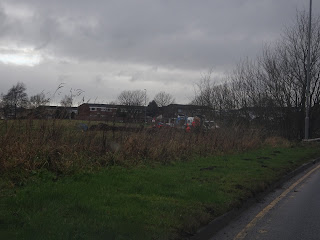
I'd gone out to Kirkby because I'd heard that work had started on the newest addition to the Merseyrail network, Headbolt Lane.  At the moment it's mainly enabling works - there's no actual steel or anything coming out of the ground - but still, a significant moment.  The first new station since Maghull North in 2018 and the first extension to the Merseyrail network since the Ellesmere Port line was electrified in 1994.  

I had to go out there in a car because of, variously, Omicron, Kirkby's reputation, and laziness, so I enlisted the BF to drive.  I do have a driving licence, and even used to have my own car, but when I had my breakdown it knocked all the confidence out of me and filled me with anxiety.  I once moved the car from the drive to the road outside and ended up sweaty and panicky with my Fitbit basically registering my heartbeat as "coronary" so that was the end of that.

He drove us out to Kirkby, a town which will never be mistaken for Venice.  It was built as overflow for Liverpool with an accompanying mass of industry for employment and like many towns of its ilk it's suffered from unemployment, crime and poverty ever since.  In recent years, Knowsley Council has made an effort to regenerate the place; some of the more regrettable housing estates have been knocked down, the town centre has been rebuilt, but this is still the place where every Hallowe'en the bus drivers go on strike because of the very real problem of kids chucking cement blocks at their windscreens.  

Hence the need for Headbolt Lane.  A lot of new housing has been built in an attempt to woo new residents to the town, and a fast efficient link into Liverpool would be a major catalyst for development.  It helps that Kirkby station itself has always been a bit rubbish - two single tracks meeting at buffers as the electrified Northern Line gives way to the diesel Wigan line - and that the branch has always had a lot of slack, timetable wise, meaning it's easy to slot another stop in.


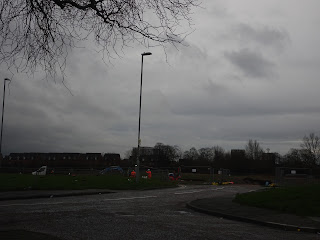
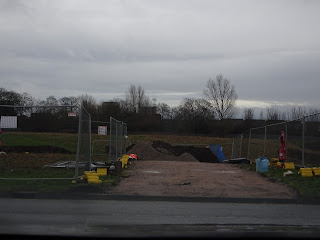
We cruised the streets of the town until we encountered Headbolt Lane itself and there it was: the worksite.  Like many new towns, the planners had decided that what people really want is lots of long looping roads with no pavements, meaning there was nowhere to stop and get out and walk.  As a result, all the pictures are taken from a moving car, and a car that could do with a wash as well, so the dark foreboding skies may also be crud on the windscreen.  


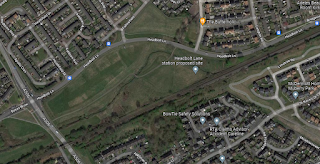
The station will, eventually, occupy the curve between the road and the railway (as someone has nicely marked up on Google Maps) with a park and ride, cycle stands, and a station building.  For now, they're simply levelling the ground and getting movers and diggers on site.


At this point the workmen spotted me snapping photos from the dashboard like a very bad private detective and started giving me funny looks, probably thinking I was from Network Rail checking they weren't slacking, so I took one more photo then we headed off.


Further down the line was a pedestrian footbridge over the railway and I thought this might be a good place to get some more shots.  Kirkby's reputation for, let's say "mischief", put paid to that.  The entire bridge was encased in a metal cage with only the narrowest of gaps between the bars; I managed to stick my telephoto lens through a bit but there are still shadows at the top and bottom.


Someday there will be two platforms for Merseyrail, a third for Northern trains, and a proper commuter station around those tracks.  A few years after that - with any luck - it'll be a through line to take you all the way to Skelmersdale.  Next year we'll be able to come here on one of those brand new trains they keep teasing us with.  Then we can get on the next train back because you don't really want to hang around.

Monday, 3 January 2022

Tickets Please!

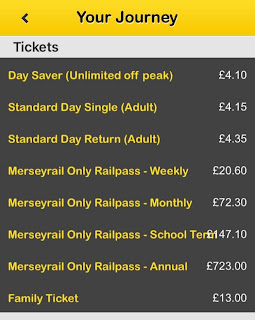
I had to go to West Kirby yesterday.  It was a Sunday, and who even knows what the timetables are these days with Covid, so I went to the journey planner on the Merseyrail app to find out when the trains were.  It came up with the times, and also the fares for the journey:


For some reason, it is 25p cheaper for me to get a Wirral-only Day Saver ticket - which allows me as many journeys over Merseyrail on the peninsula as I want - than to get a simple Birkenhead Park-West Kirby return.  This is obviously illogical and is probably down to some nefarious corporate shenanigans I am not privy to.  All I know is, as a customer, I could save myself an entire quarter of a pound by getting a Day Saver.  So I decided to do that.

I also remembered seeing Merseyrail's Twitter feed, and its website, and how it said you could buy the Day Saver online.  Handy!

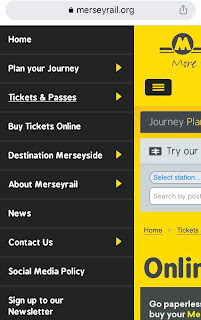
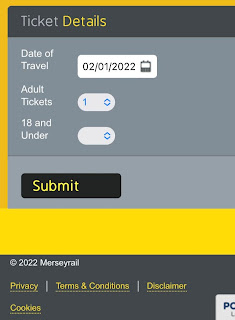
You can't buy a Day Saver from within the app.  That would seem like the logical place to buy it - I was sat there with my phone in my hand, Apple Pay at the ready.  But no.  Instead I had to open the Merseyrail website on my phone and go to Buy Tickets Online there.


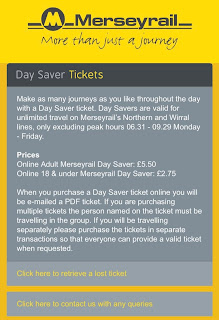
I went onto the page and there was another problem.  The only Day Saver on offer was one for the whole of the network - £5.50.  Which, if you've been paying attention, is more than the £4.35 return to West Kirby, and more than the £4.10 Day Saver I'd been promised by the app.


By this time I was getting a little disgruntled.  The logical thing to do would be to stop, go to the station and buy the cheap Day Saver in person.  I did not do this.  I'd put time into this purchase, dammit, and besides, I thought this might be some prime CONTENT for the blog.  Look, I'm not going out on the trains, I've got to put something up here to justify that Ko-Fi money (by the way, thank you to the anonymous person who is paying £3 a month, even when there's no posts at all; you're a treasure and a king/queen).  I therefore decided to use that Ko-Fi cash to buy the more expensive ticket, just because I'd not done it before, and I was curious.  I ticked the boxes to say I wanted an adult ticket for today.


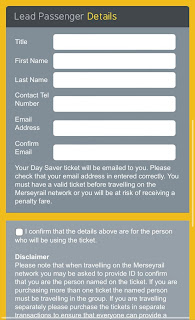
This took me to another page where I had to fill in my e-mail address... and my name... and my phone number.  It seemed like a lot - isn't my e-mail address enough? - but I did it anyway.


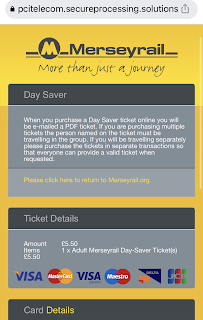
Finally, proceed to payment.  Once again, I was going to have to type.  I had a device in my hand where a tap of my fingerprint (yes, I'm on an iPhone 8, I'm old-skool) could authorise a payment from my account.  This option was not available.  Instead I had to find my wallet and type in all my card details.


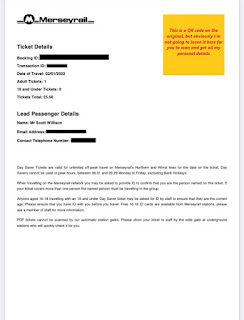
After a couple of redirects, and a wait that started to prickle at my anxieties, success!  I had purchased a Day Saver and now I could access the PDF with my ticket on it.  Yes, you read that right; I was e-mailed a PDF so I could print it out if I wanted.


This is, let's be honest, nonsense.  In 2022 there is no need for any of this.  I have various apps for various different train companies; I've been buying e-tickets for years.  Most of the time it goes something like this:
  • Pick a journey
  • Pick a ticket
  • Press my finger to the Home button to pay
  • Put it in my iPhone Wallet, or in the train company app, and activate it on the day
There's a QR code that I can use if I'm stopped by a ticket inspector, or on ticket gates.  It sits in my phone and is easily accessible and simple to use.  Why are Merseyrail persisting with this system?

As with everything else to do with ticketing on Merseyside, it's archaic and over-complicated.  The ability to pick up pre-booked tickets at stations was only added late last year, even though, as a network with 100% fully staffed ticket offices, this should have been a service for years.  The MetroCard continues to struggle to exist, much as its predecessor the Walrus did, with weird quirks for no reason (why can't I order a card online?  Why do I have to go to a PayPoint store?).  It's 2022; I have a device in my hand that has more processing power than every NASA computer that sent men to the moon.  I should be able to simply buy a ticket online.  Leaving everything else aside, the easier it is to buy a ticket, the more likely people are to do it.  

I'm sure there are plans to improve all this; I'm sure there is one very overworked young programmer sweating over his PC trying to wrangle the future.  As a customer, however, it all feels a bit last century.

(Obviously, after all this wrangling, my ticket wasn't checked once, so I could've quite easily not bothered and saved myself the money).

Wednesday, 29 December 2021

Totals, For What It's Worth

Well, that was brief, wasn't it?  After months of being told not to bother with non-essential travel, and then a few months of generally not wanting to die, I finally got up the courage to go back on the trains.  To Dudley, of all places.  

It was all going so well.  And then Omicron arrived and spoiled it all.

As a consequence, 2021 moved the totals on the West Midlands Railway Map project, but just a little.  This year I collected a grand total of TWELVE more stations:

  • Dudley Port
  • Sandwell and Dudley
  • Tipton
  • Coseley
  • Hatton
  • Lapworth
  • Telford Central
  • Oakengates
  • Wellington
  • Walsall
  • Bescot Stadium
  • Tame Bridge Parkway
None of them, sadly, will enter the hall of fame.  I'd made plans for at least one final trip in December, but life and a virus intervened, so 2021 ends with a rather disappointing haul.  When I can leave the house again, I think I'll aim to do a few actually nice places, just to begin with, so I don't spend all my time in back streets and waste ground.  The West Midlands aren't coming off as especially lovely in all this.

What does that mean for the totals?  Actually it means a nasty surprise for me.  I returned to my spreadsheet, where I simply add in the totals, and I realised that I'd been adding the numbers up wrong.  I'd been keeping a correct tally of how many stations I'd visited - but I'd been comparing it to the old number of stations on the map, a couple of revisions ago.  Now there were a lot more stops and so suddenly my percentage completed plummeted.  I'd thought it was going surprisingly well.

Anyway, the point is there are 164 stations on the map, and I've been to 63, meaning there's 101 left.  So if I had managed to get out in December I'd have knocked the number remaining to under 100, which is really, really annoying.  

There's still plenty to do.  There are entire branches that are untouched.  Far-flung cities with uncollected stations.  There's also the issue of Horden station, sitting on the Northern map, gleaming and unvisited.  All I need is permission from the government and a fantastic face mask.