Tuesday, 28 February 2023

Enter The Gap


This is a warning.

If you come to this blog for railway-related reasons, this is about as good as it gets.  I went to Long Buckby station and, because it is miles from anywhere, I didn't go to any other railway stations.  Not one.  I did look at possibly walking to the next station, but that's either Rugby or Northampton, and I thought both those towns deserved better than me collapsing onto the platform, dripping with sweat and desperate to get the train home.  So this is the beginning and end of all the railway content.


This blog post is going to continue for quite some time more but you can safely check out now if you want.

Still reading?  Bless your heart.

I walked down from the elevated platforms to street level, past what passes for a ticket office these days (one small portakabin, open 06:15-11 weekdays only) and onto the main road.  There's a big car park at the station, reflecting its position halfway between London and Birmingham, although it didn't look particularly well used.  I'd guess that post-pandemic home working patterns have left a lot of station park and rides vacant a lot of the time.  Certainly the one at Bidston, on Merseyrail's Wirral Line, very rarely seems to get into double figure occupancy.  


The space between Long Buckby proper and the station was meanwhile being filled with dozens of new build houses, executive homes and luxury living, peering over drainage ponds and wrestling with the hilly terrain.  The young trees on the grass verge held neat little signs announcing they were there as part of the Sakura Project, a scheme celebrating 150 years of Japanese-British friendship and co-operation (with, ahem, a brief interruption between 1939 and 1945).  They've planted cherry trees all over the UK; I don't know what the Japanese are getting out of this.  I'm guessing something like oak or beech but I hope they've gone rogue and verges all over Japan are planted with horse chestnuts to promote the international joy of conkers.

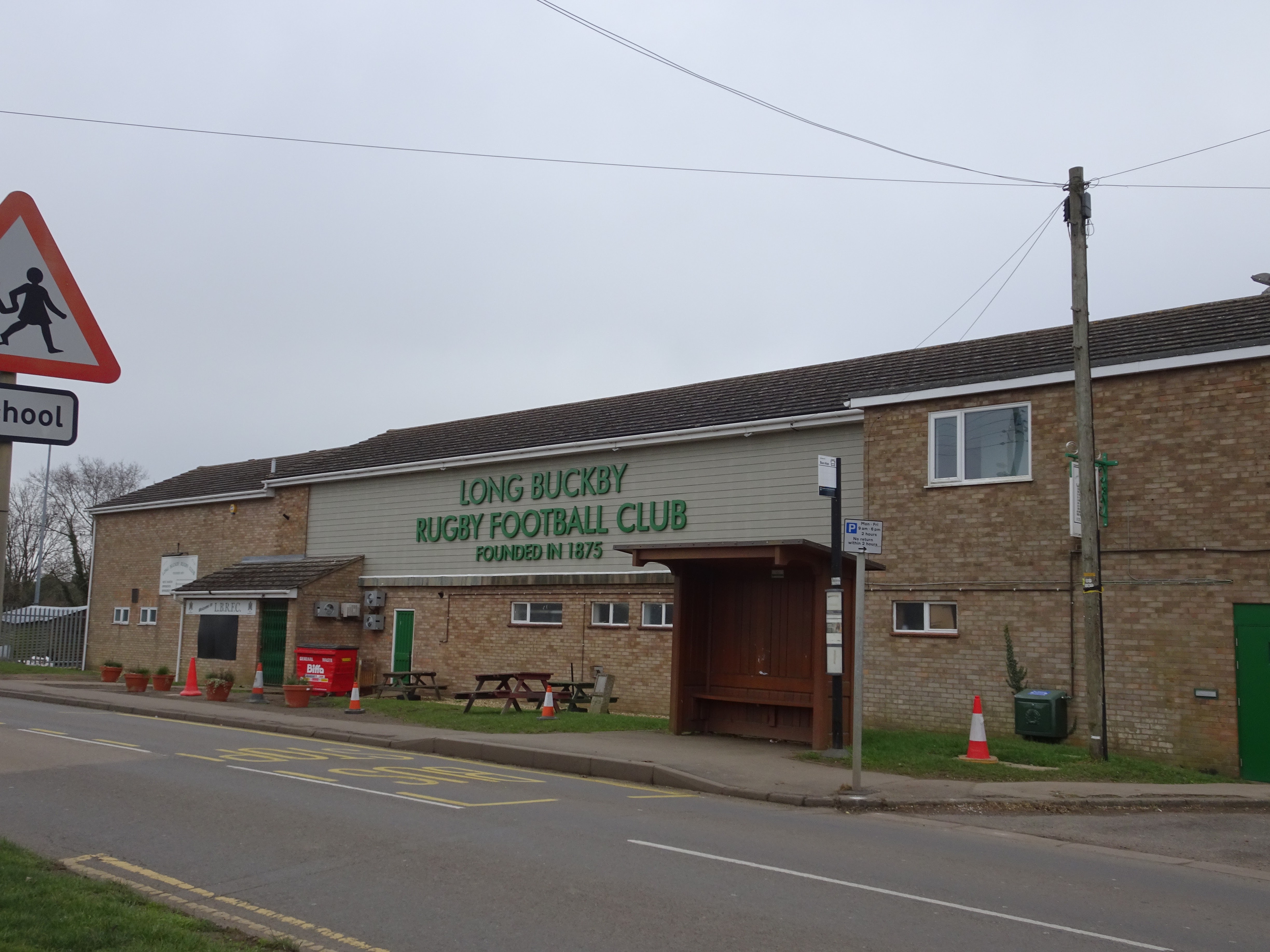
The rash of newness gave way to the proper village.  You could tell we were close to Rugby, because while the football club was in a little white hut, as seen above...


...the rugby club was massive and unapologetic in its dominance.  

Passing a teenage girl in a HRVY sweatshirt - the first time I had proof he existed outside of Strictly, and I'm still not entirely sure what he's famous for - I took a detour into a cul-de-sac to look at the remains of Long Buckby's castle.


What do you call a motte and bailey castle when there's no fortifications, ditches, or relics of any sort?  A mound.  I'm sure Long Buckby is very proud of its Scheduled Ancient Monument but to be quite honest, if there wasn't a sign telling me otherwise I might have thought this was an abandoned skate park.  Even Mary Beard would struggle to get excited by that.  I plodded back out of the cul-de-sac, onto the main road.  Long Buckby's library promised "books and buzz" and offered warmth and free hot drinks every weekday afternoon, which got my blood boiling - nothing to do with them, everything to do with the government - and I was at the splayed cross that forms the centre of the village.


All was present and correct: a pub, a chippy, a supermarket, an Indian restaurant.  It seemed like a good, wholesome place to live, somewhere nice to pass your life.  Bit of history, but not so much that it felt like a museum; bit of modernity, but not enough to kill the charm.  


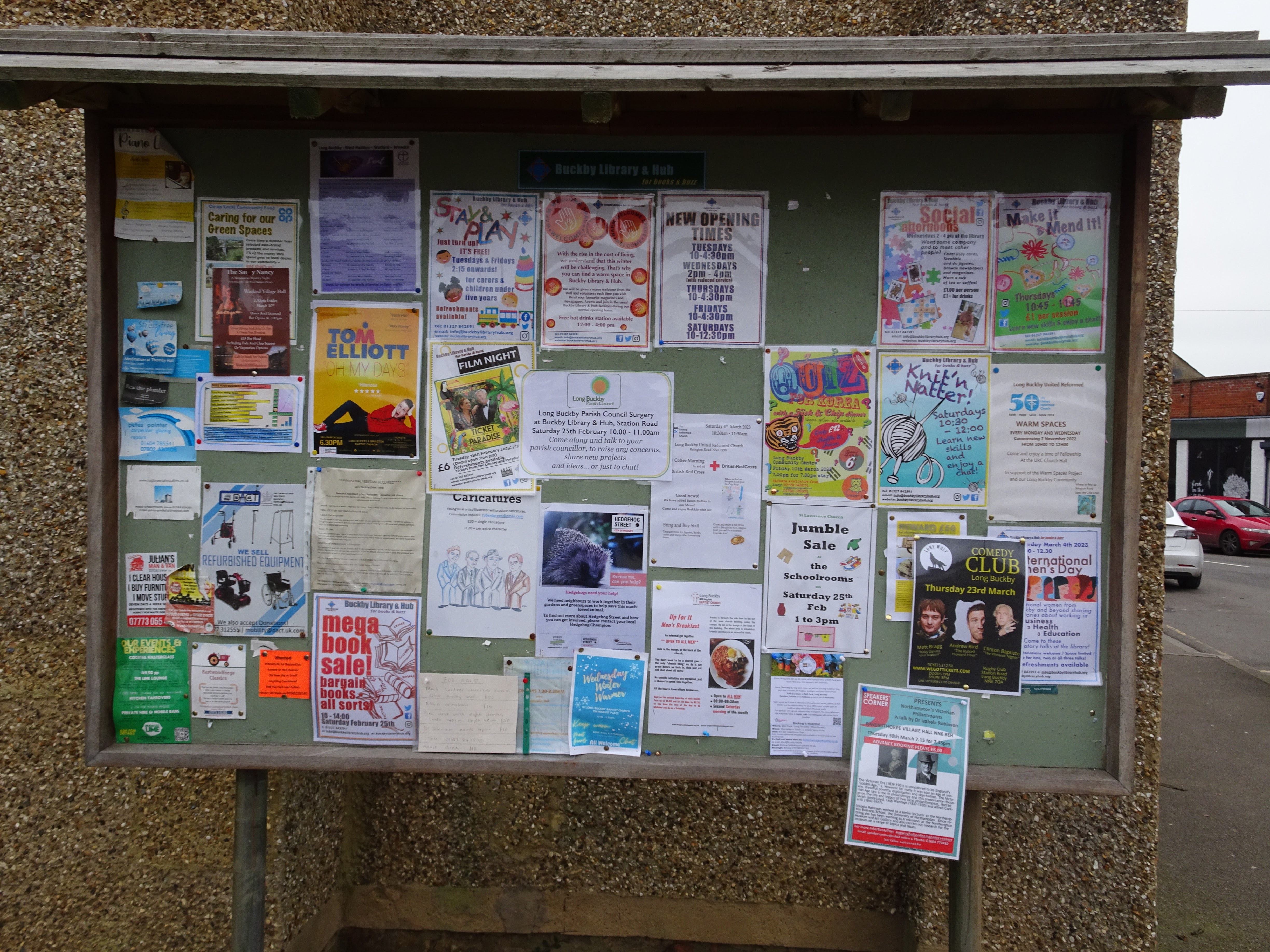
I hovered over the noticeboard, as is my wont.  In amongst the usual parish notices was an advert for a tour by "comedian and magician" Tom Elliott, who gets glowing references from Miranda Hart ("such fun") and Rosemary Conley, possibly the first time those two have ever shared a bill.  You don't hear anything from Rosemary Conley any more, do you?  There was a time when her Hip and Thigh was inescapable.  


I didn't hang about.  I had a lot of walking ahead of me, so I left the village on one of its winding side roads, hemmed in by old cottages and converted workshops.  There was a standard lamp left outside one of the houses, with a post-it attached saying "FREE"; sadly, I think the lamp would've only appealed to someone creating a 1980s themed front room.  It was all chrome spotlights and looked like an electrical nightmare.  There was a thatched roof pub which, unforgivably, didn't open in the daytime, and then a long steep hill.
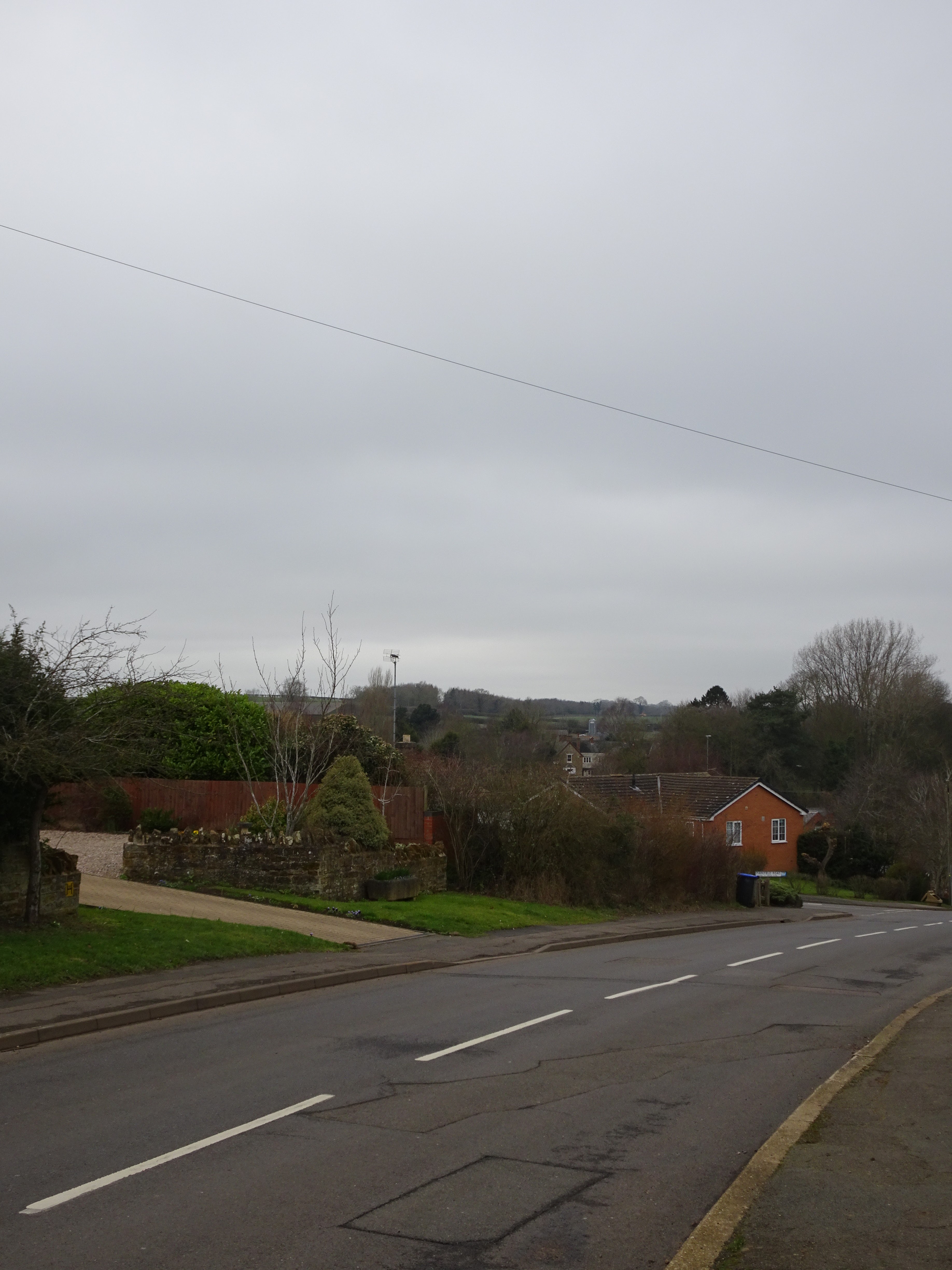

I was heading for one of the most famous geographical spots in the country.  The hills here are sharp and tall; crossing them before the advent of the engine would've been tiring.  Fortunately, there was a break in the hills, near the village of Watford - a Watford Gap, if you will.  This gap became the spot where the canals, railways and roads were threaded through to get from London to the north and I thought I'd go and have a look.  


The village thinned, turning into the small hamlet of Murcott, then I passed under the railway again and onto roads without pavements.  Normally this would irritate me beyond belief, but the road was surprisingly quiet, and the sightlines were good, so I was able to pretty much walk on the carriageway and only rarely had to leap onto the verge.  It was quiet, too, so quiet that my big heavy boots seemed unforgivably loud, clattering on the tarmac.  Now and then a train would go by, a freightliner tugging metal crates northwards.  


Sometimes all you need is a walk to lift you up.  A power stroll where you have nothing to do but take in the views and enjoy your own company.  It wasn't a complicated route and so I could let my mind wander and divert.  


Soon enough I was on the outskirts of Watford, a Watford which is completely unrelated to that other Watford at the end of the Metropolitan Line.  When Londoners disparagingly refer to something as coming from "north of Watford" - i.e vulgar and common - this is the one they're technically referring to, as the Watford Gap was traditionally the end of the South and the start of the Midlands and the North.  Although I'm not sure a lot of Londoners know that and are genuinely referring to the town in Hertfordshire, as anything outside the M25 is basically not worth bothering with.


For all its name recognition, Watford really isn't much at all.  Another tiny village, although it has far fewer facilities than Long Buckby; just a village hall and what used to be a pub but is now a private home.


Did I see the words "Jurassic Way" and immediately start humming the theme to Jurassic Park? Of course I did.  I am never not tediously predictable.  Sadly there was no sign of Sam Neill or a rampaging velociraptor, just a path down the back of some garages and past a farm house.  I strode purposefully down it, over the gate and across the field, then turned back when I realised I'd purposefully walked along an access route to a sewer works and not on the footpath as I'd expected.


By now the silence had been replaced by the relentless, monotonous roar of engines, as the M1 rose up on the horizon.  It was on embankments and seemed to form a slash across the sky, the green stopping suddenly to hit a wall of traffic.  Trucks and cars sped by at 70 miles an hour and I felt quite tiny and insignificant, a lone figure in a field.  None of those vehicles even knew I was there as they barrelled by.  Hundreds of people going past and I wasn't even noticeable.

I got up close to the motorway and disappeared underneath it, into a solid concrete underpass.  Suddenly there was a power shift; rather than being ignored I felt secretive.  I wasn't a passer by, I was an interloper, lurking beneath the road, a troll under the bridge.  There was something weirdly thrilling about it.


It helped that this was too far for teenage graffiti artists and drunks to use it as a hang out spot slash toilet.  There were bare walls of mouldy concrete and nothing more.  I loitered for a few moments, listening to the rattle of wheels, taking in the spot, then I pushed out the other side, becoming another nobody again.


Now it was time to cross the next big transport route to take advantage of the Watford Gap, the Grand Union Canal.  There are locks here and, as I arrived, a narrowboat had just passed through the lowest one.  Its crew - an elderly man and his middle aged daughter - trudged up to the next lake, glowing slightly in their bright hi-vis lifejackets.  


I skipped across the lock, water gushing beneath my feet, and then took a small side path beneath an electricity pylon with large yellow signs warning anglers to lower their rods unless they wanted a nasty shock.  Shortly afterwards I was emerging onto the oldest of the transport methods to pass through the gap: the A5, formerly known as Watling Street, the Roman road that ran from Dover to Wroxeter.  


The M1 has rather stolen the A5's thunder in this part of the world.  It's two lanes of traffic, surprisingly quiet considering its importance, and running in a straight line south to Dunstable and then London.  I was rarely bothered by vehicles as I made my way through one of England's finest collections of roadside litter.  England is rightly renowned for its skill at peppering grass and trees with discarded refuse - few other countries can compete - and as I walked on the grass I saw all sorts of fascinating artefacts.  Fast food wrappers.  Receipts.  Discarded bottles of an infinite number of beverages, some containing a yellow liquid I'm pretty sure wasn't Pepsi Max.  And the sheer quantity of crisp packets!  Every flavour and variety you could imagine, some of which I'm pretty sure haven't been made since the 20th century.  It made such a difference to my journey.  It could've been a boring trudge through endless green, but the dayglo purple of a Monster Munch packet or the snarled up face of the Colonel on a crushed KFC bucket would catch my attention and break up the monotony.


The West Coast Main Line passed under my feet.  Surprisingly, considering this is one of the busiest rail corridors in the country, I could never manage to get a photo with an actual train in it.  Every time I poked my head over the parapet it was completely silent.  Perhaps it isn't overloaded after all, and HS2 really is a massive waste of money?  (No).


I turned left at the actual Watford Gap crossroads where a small industrial estate huddled between the A5 and the railway.  There used to be a station here, Welton, which was quietly closed in the Sixties as the line was upgraded.  There was no space for small country halts on the all-new electric West Coast Main Line.  All that remains is a goods shed by the track, but a passenger halt of sort remains, in the form of Watford Gap Services, just visible in the trees behind.


A lot of motorway service stations have "secret exits".  These are back roads that mean emergency and delivery vehicles can get into the services without needing to go on the motorway.  In recent years, these have been largely closed off with barriers, as locals got wise to them and used them as a quick back route onto the highway instead of driving to a junction.  Watford Gap's northbound back road was gated and blocked off, but the southbound entry was open, so I became one of the very few people who can say they walked to a motorway service station without ever getting near a car.


Watford Gap services was the first to open on the brand new M1, though it was nowhere near finished on the first day of service in 1959 (and actually Newport Pagnell would be completed before it, in 1960).  There were only temporary facilities initially, mainly laid on so the dignitaries and journalists had somewhere to go once they'd driven up the new motorway - although the toilet block opened two weeks after the fuel, so I'm guessing the local bushes were extremely well used.  The first section of the M1 ended at junction 18, a couple of miles further on, so Watford Gap (also known as Blue Boar, after the first operator) was in a prime spot for traffic going north and south.
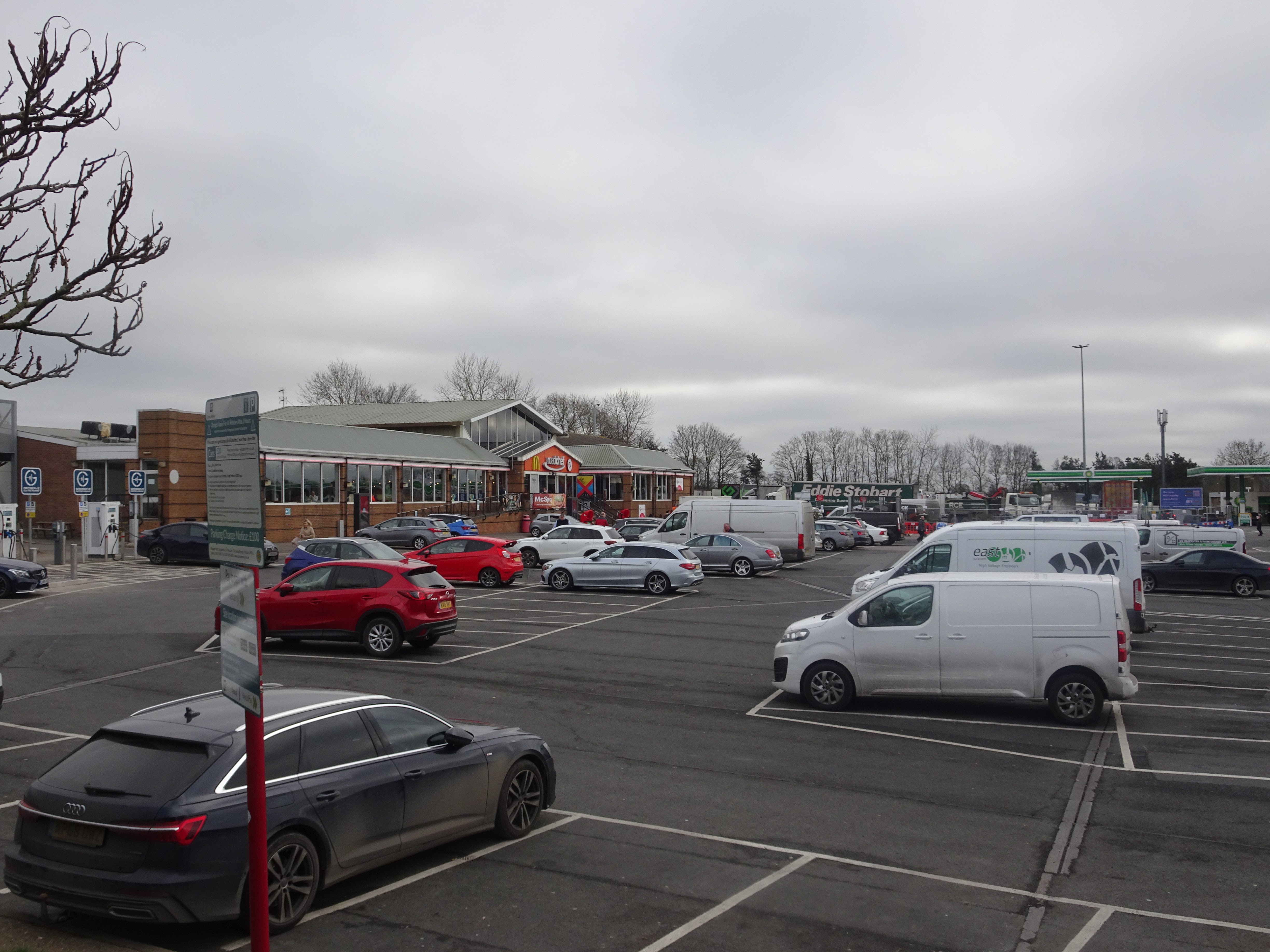

There's a great radio documentary by Pete Paphides on BBC Sounds, Late Nights At The Blue Boar, which talks about the early days of Watford Gap and how it acquired a showbiz glamour in the sixties.  Its position made it a welcome stop for bands as they headed to and from the capital after gigs, as one of the few places that was open 24 hours a day, and so it quickly became a place for the likes of the Rolling Stones, the Kinks and the Beatles to pause and have some egg and chips and a wind down.  The documentary has some great anecdotes from a woman who was a waitress at the time - apparently Tom Jones once whistled for his bill, only for the unimpressed staff to ask "have you lost a dog or what?"  Groupies, too, hung out at the station to catch a ride - of all sorts - with their favourite rock stars, and motorcycle gangs pulled up to show off their bikes.  


There isn't a whiff of glamour now.  The invention of tour buses meant that the biggest bands no longer needed to stop at service stations for refreshment; then, in the seventies, football hooligans started to use them as a handy spot for a fight, meaning they were reconfigured to be more defensive.    Cost-cutting got rid of the waitresses and the silver service.  The extension of the motorway network meant service stations became far more popular, and Watford Gap lost its mystique.  Now it's simply another Roadchef halt, its name carrying more meaning than its prosaic, tired interior.


I went to the McDonalds and got myself a Coke Zero and some fries; I'd walked five miles by now and I needed fortifying before the trip home.  I slipped into a sticky tape-patched banquette next to a group of fifty somethings boasting about how they could eat all the junk food they liked, they never seemed to put on weight, the absolute bastards.  On my other side were three lorry drivers, two of whom guffawed when their mate came and sat down with a salad ("a SALAD!" they exclaimed, like it was a particularly filthy sex act).

I still like motorway service stations, though they make it really hard.  Like railway stations and airports they have that fleeting excitement, always on the move, always shifting; a population that's massive and also temporary.  But while railway stations are historic and cared for, and airports are rich and luxurious, motorway service stations are almost always cheap and miserable.  The architecture has been patched and reconstructed so its lost any of its ambition.  Every space has been crammed with concessions - Watford Gap features what I am pretty sure is the world's smallest Leon, little more than a counter and a touchscreen.  And the toilets always stink.  You don't have room to relax or circulate at a service station, it's just get in, give us your money, piss off.  There are exceptions, usually the newer constructions - Norton Canes on the M6 Toll is almost beautiful, bright and airy, and Tebay services on the M6 is legendary (although expensive).  They'll always have a certain thrill to them, the pleasure of pulling in for a break after staring up a horsebox for fifty miles and stretching your legs and having a sandwich.  It's a shame that they could be so much better.  (Also reopen the Forton Tower you cowards).  


I left the services the way I came, no doubt to the confusion of the security guards, and started my walk back to Long Buckby.  Normally I like to go a different way - a circular route, to make things interesting - but the only real way to get there without going the way I'd come was to head further down the A5, and that was astonishingly dull.  So I resigned myself to repeating my route home.  If you want to know what that was like, read this blog backwards.


I paused in a small park on the outskirts of Long Buckby.  My eye had been caught by a sea of snowdrops and, when I ventured inside, I found a lovely little nature reserve, the Mill Park Reserve.  Until the early 80s it was a tip, but the Parish Council bought it and returned it to nature.  I found a bench and sat down and changed my t-shirt, which was dripping with sweat after my ten mile round trip.  This is the problem with walking at Gay Pace; it leaves you moist in all the wrong places.  However, after a change of top and a spray of deodorant and a drink of water, I started to feel human again, and felt I could return to polite society.


And polite society, I do, of course, mean a pub.

The thatched roof country pub was still closed when I passed so I headed into the centre and to the Pigeon.  Inside was quite a surprise; I'd expected your standard village boozer, but this place was aimed at a younger market, with gleaming neon and a touchscreen jukebox and a snooker table.  There were dozens of gins and craft ales behind the counter and posters advertising their music nights.  However, the villagers didn't seem to have got the memo that this was now a fun, youthful pub, and the only patrons were retired men.  Once was informing the barmaid how to correctly pull a pint of Guinness.  Another sat on his own, watching Sky Sports News in silence.  Plus there was me, the fat rambler.


It was good to decompress after all the walking, and I luxuriated in my pint.  Finally, as the sky darkened for the evening, I rolled back to the station for my trip home.  It was going to take hours.  I made my mind up to go somewhere closer to home for the next trip.


I'll take a moment here to once again thank the people who have donated to my Ko-fi.  You are generous souls, and I promise I'll spend the money on train tickets and not beer.  Well, maybe the odd beer, but only when I'm out on the trains.

Tuesday, 7 February 2023

Parry, Thrust

Outside Stourbridge Junction's ticket office, some stout railway workers of a certain age were discussing strikes.  They were bored sounding, unhappy, as they debated how long all this was going to go on for.  They certainly weren't rabid Communists hell-bent on disrupting the life of good ordinary folk.  Pay them what they deserve, eh?


I was in Stourbridge for one reason and one reason only: it wasn't Kidderminster.  It was a little down the line, it was uncollected, I may as well.  There were only three of us leaving the station - everyone else on the train changed to a different platform.   There was the blonde girl whose back you can see up there and, behind me, a studenty type with floppy hair and a body like a particularly underfed stick.  He smirked as I took the sign selfie, so I darted across the busy road to try and put some distance between me and him.


It was sadly for nothing.  It turned out the three of us were all headed the same way and we all walked at roughly the same pace.  As a result, we were trapped in lockstep, one after another, her in front, me in the middle, him at the back, and probably all wishing the others would take a side path and leave us in peace.  I finally took action, loitering in a side path and pantomiming looking at my phone to allow the student to pass.  All this did was put me in third place, but at least the blonde girl would no longer think I was stalking her.


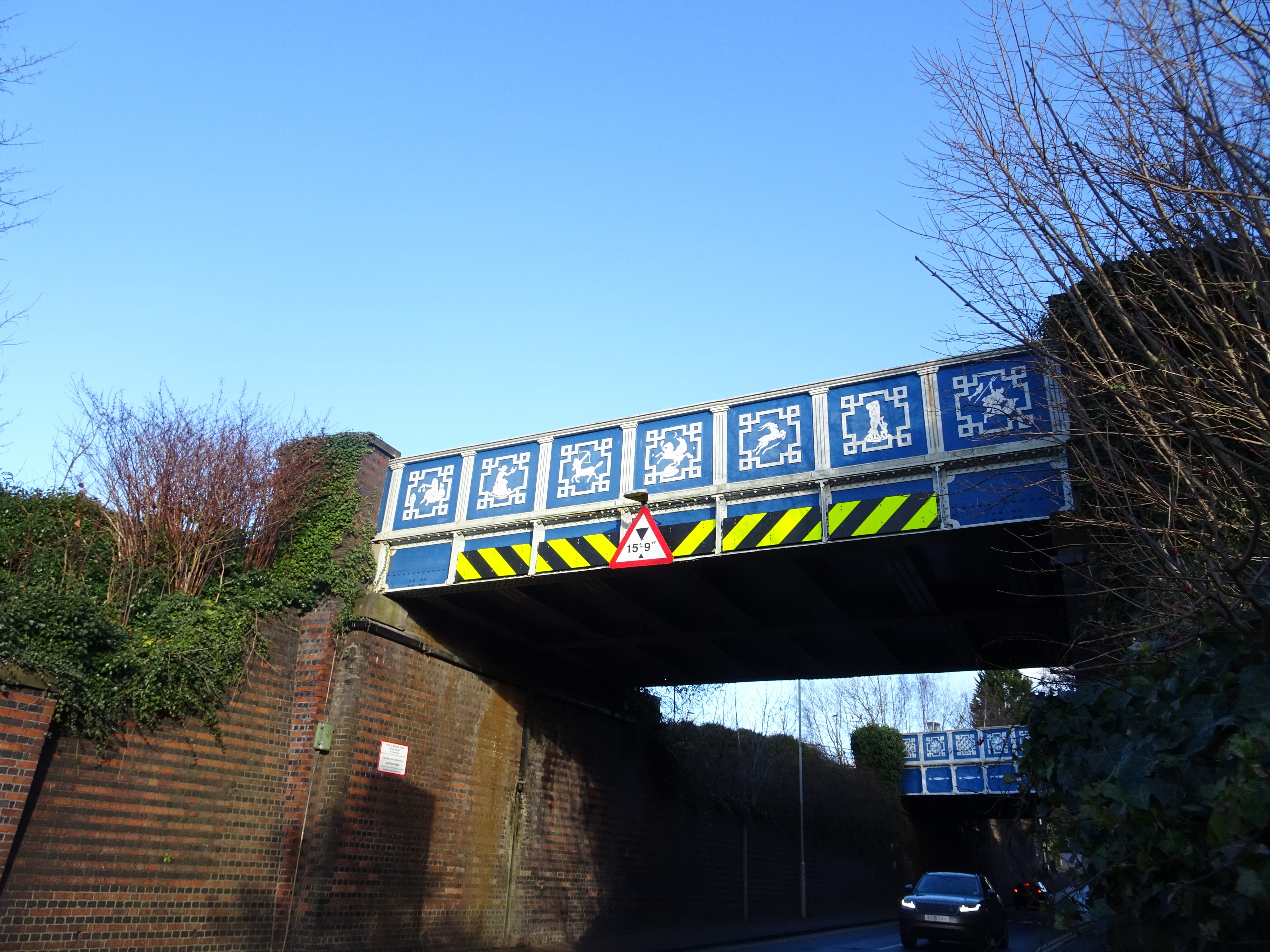
Being a town in the West Midlands, Stourbridge is blessed with a ring road - a proper one this time, that goes all the way round - and which featured a handy little gateway to welcome you.  If that didn't give away the fact that this town was in better shape than its neighbours, the fact that one of the planters on the fence was sponsored by Stourbridge Croquet Club confirmed it.  This place was posh.


I walked into the middle and became increasingly furious with myself.  This was a nice town, with shops and cafes and restaurants and lovely historic buildings, and I was enjoying it.  That made me quite angry.  Of course you can be pretty when you've got a few bob.  Of course your town is able to weather the economic storms when there's plenty of spare cash to chuck about.  I wanted Stourbridge to be at least as bad as Kidderminster, but no, it seemed to be perfectly nice.  How dare it.  By the time I rounded a corner and found a Waitrose I was incandescent.


I always take these trips with the best of intentions.  I want to find lovely places, and if they're places you wouldn't expect to be nice, even better.  I've been to many a town across the north with a terrible reputation and found it charming and interesting.  Liking Stourbridge seemed obvious.  It was like thinking the Lake District is "quite pretty".


I reached Nickolls and Perks - a wine merchant founded in 1797; of course I didn't go in, I'm far more of a Bargain Booze kind of chap - and a French bistro-slash-deli and I reconciled myself to Stourbridge being pretty and well-off and thoroughly nice.  I walked back to the ring road, because the good thing about ring roads is they're always a little bit shit, and followed it round until I found a pub.


Even then the barman called me "handsome".  It was as though Stourbridge had heard that Kidderminster was getting a bad review and was determined to make sure I came away with five stars.  I drank my pint, listening to the chat of the locals, letting it mellow, then I headed to the station.  The other station.


At the centre of Stourbridge is a large transport interchange.  It's the "wrong" side of the ring road, so it's accessed through a network of subways that channel you away from the traffic and then churn you out into a large glass bus station.


Follow the path round the edge, though, and you reach Stourbridge Town station.  The main line to Worcester swept past the town to the south.  It was decided that the distance from the centre was just that little bit too far, so a branch line was built from Stourbridge Junction.  That alone should tell you how much money was swilling round Stourbridge.


A shuttle operation will always be difficult to run and justify and the Stourbridge Town branch was threatened with closure throughout its life but somehow it managed to cling on.  Over the years it would get run down, then have an injection of cash, then get run down again.  It's difficult to find a reason to keep a line of less than a mile open.  


Apologies for the slightly pained expression on this selfie.  There was a gentleman loitering by the entrance to the station who had - let's just say issues - and I didn't really want to catch his eye.  


One advantage of the tiny branch line - reportedly the shortest in Europe - is you can use it to try out new technology.  As such, since 2009, the train car use has been a Parry People Mover.  This is a unique class of train, unused anywhere else in the world, that uses regenerative braking to minimise the amount of energy needed.  It's all something to do with a flywheel; I've read the explanation about four times and I still don't really get it, but I'm currently suffering with the dreaded lurgey so my brain is a fog anyway.  Here is a video of it pulling into the station anyway.


Yes, we're pivoting to video, it's all very 2014.


It is, quite unsurprisingly, tiny.  It's like a little Lego train.  It doesn't need to be big, of course.  The car does the route in three minutes, going back and forth, so there's six trains an hour.  You should be able to get a seat.


Our tickets were checked as we boarded and inside it was clean and bright.  It was, however, very much like being on a bus.  Once we started up, the impression was even stronger.  The Parry People Mover was loud.  Knowing nothing about engineering, I'd thought it would be virtually silent, like an electric train.  Instead it was like being on a minibus.


I wasn't a fan.  And, it seems, neither was anyone else.  There aren't any other Parry People Movers anywhere else in Britain, and the company was wound up last year.  The website is long gone.  Now the talk is of replacing it with a "Very Light Rail" route that would take trains from Stourbridge Town, via the Junction station, and then up a disused freight line into Brierley Hill, where it could meet the Midland Metro trams.  I'm not entirely sure why you can't just run the trams along the same route - why you have to come up with a whole different technology - but I'm sure there's some perfectly logical reason for it that isn't simply "it might be a lot cheaper" or "we can promise something really hi-tech rather than something that's actually feasible".


The service is neatly interleaved with the proper train line, so as we arrived at Stourbridge Junction we had just enough time to nip across to the far platform for a train back to Kidderminster.  I noticed that the station had its own version of whatever we're calling the West Midlands' Attractive Local Feature boards - a WALF?


Wow, the glamour.  It turns out Kidderminster has one too, as I spotted when I loitered at the station for an hour waiting for my train home.  Even that was better than going back into town.  I'm not daft.


Sunday, 29 January 2023

Downhill All The Way


Kidderminster is one of those places that will be forever associated with Victoria Wood in my head.  Long before I ever dreamed of heading to the West Midlands "Kimberley's Friend" was talking about Mrs Gupta on the tills:

She's nice, Mrs Gupta.  She comes from - ooh, where is it?  It's got a right funny name and it's a really long way away.  Kidderminster.

It means that, mentally, the word Kidderminster is said in a particular way in my head and always will be.  Kidderminster.  Kidderminster.  

I strode out of the station and down the hill towards the glistening spires of the town centre.  Actually the pavement was glistening in places too; the frost hadn't entirely departed from the heavily shaded streets and it made the path slippery.  I moved gingerly, not caring that I looked an idiot.  I recently turned 46 which is, I believe, officially late forties, and so the idea of breaking a hip is now something I should be concerned about.  I'm getting my electric mobility scooter next week.  

I passed the courthouse, and a new apartment block with a real ale pub in its base.  I find this new brand of pubs fascinating but also off-putting.  A shop converted into a bar, selling small brews - it doesn't feel like a proper pub.  I don't think I could relax in a place that small, where the barman can see you drink and is probably going to ask what you think of the Fuzzy Forehead IPA when you're not that bothered so long as it's got alcohol in it.  Further along was an interior design shop whose window showcased neon signs that said things like DANCING QUEEN and GOOD VIBES ONLY and frankly it took every inch of self control not to hurl a brick through the glass.


Like most Midlands towns, Kidderminster wholeheartedly embraced the Ring Road, and a dual carriageway sweeps around most of the town centre; like most Midlands towns, they also forgot to finish the loop and there's a big unbuilt stretch.  I disappeared into a subway that took me into an open space at the centre of the roundabout.  I always like these little islands, surrounded by roads but hidden away; if they weren't a haven for all the worst behaviours in society they'd be a lovely spot to hang out in.  As it was I simply pressed on through to the other side.


Waiting at a bus stop was a man in shorts.  Shorts?  On a cold day?  Obviously I swooned at his sheer overwhelming masculinity.  This is the behaviour of an alpha male, demonstrating his astonishingly high testosterone levels that mean he simply puts up with having freezing cold legs on an icy day.  Some might argue that this is why "trousers" were invented, but those people are cowards or women, inadequates who are afraid to flash goose pimply white shin flesh.  I managed to somehow walk past him, despite the massive erection his manliness had caused me, and I ignored the huge puffa jacket he was wearing on his top half to stop hypothermia kicking in.  What a hero he was, and definitely didn't have any hang ups about his gender or anything.


The town centre proper was marked by a statue of the town's most famous resident, if you don't count Rustie Lee: Sir Rowland Hill, inventor of the postal system.  Thanks to him we can now pay ninety five pence to send a bit of coloured card to a nephew who's forgotten we exist and who will throw it in the bin the minute he realises there isn't a tenner inside.  Thank you, Sir Rowland.  


Kidderminster was proud of its son; in addition to the statue, there was a shopping centre named after him, and the Wetherspoons is called the Penny Black.  Or rather, was called the Penny Black; it closed in 2019.  That should have been my first warning sign.  A town of fifty five thousand people that cannot support a Wetherspoons is not in a great state.

It was market day, and I threaded through the stalls on my way up the steep hill to the Swan Shopping Centre.  Vape products seem to be very big on markets these days.  Row after row of tubes and boxes ready to pump over-sweet smoke into the face of passers by.  The Swan centre, meanwhile, crowned the top of the hill, but inside was dark and depressing.  The Christmas tree was still up, and it was long past Twelfth Night.  


I wondered if the Rowland Hill Shopping Centre was perhaps where all the proper shops were, so I gave that a go.  It was, if anything, even sadder than the Swan, to the extent that I wasn't even sure if it was open when I walked in.  Most of the shops seemed to be long gone.


Still, there was a third shopping precinct to try, Weaver's Wharf, which was opened by the Duke of Kent in 2004.  (A newspaper report from the time says that the reception was in Frankie & Benny's, and I would've dearly loved to see His Highness's face when they presented him with a freshly defrosted chicken parmigiana and a Diet Coke with no ice).  There was a Next, and a Marks, with the anchor tenant being... Debenhams.  Oh dear.


I leaned up against the wall of the vacant department store and took stock.  Besides me Julia Roberts still grinned through the glass in a perfume ad, her features washed out from the sun, so all that was left was that legendary grin; the Cheshire Cat, sponsored by Lancôme.  I was miserable.  I'd got a timed ticket because it was a lot cheaper, and that meant I had another four hours to kill in Kidderminster.  I felt like I'd already seen literally everything there was to see and there wasn't much.  The architecture was uninspiring, the shops were bland.  I googled Visit Kidderminster and discovered that the top attraction was the Severn Valley Railway (closed for the winter) and the second attraction was the Museum of Carpet (only open in the morning on a Thursday).  After that it was an Arboretum on the outskirts of the town, and then nothing.  


There weren't even any decent pubs.  Every one I'd passed had looked like you needed a minimum of three facial tattoos to gain admittance; one even had a sign over the door saying they were not responsible for any injuries sustained on the premises, which is of course totally normal.  I circled through the back of Weaver's Wharf and found one reason for the town centre's lack of dynamism - a huge Tesco Metro in a sea of parking.  A look at the map reveals that there's a Sainsbury's and a Morrison's within the ring road too.  Why bother with the centre when you can do all your shopping in the one store - food, clothes, everything?


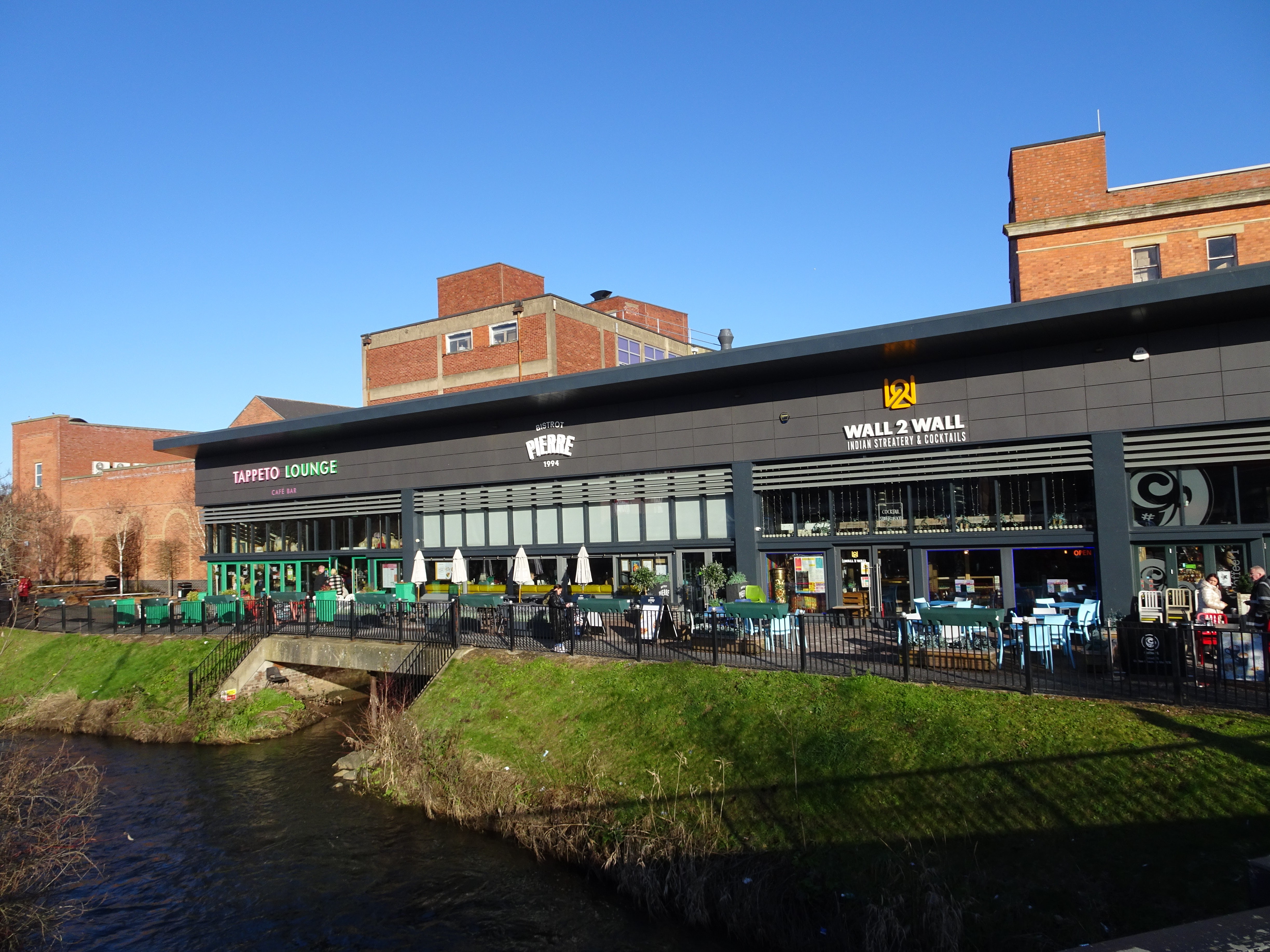
I ended up in a little coffee shop with a cup of tea, passing up the opportunity to eat at an Indian "Streatery" on the grounds that streatery is one of the worst neologisms I've heard in a long time.  


This blog has, entirely coincidentally, become not just a catalogue of knob gags and pictures of idiots larking about in front of railway stations, but also a chronicle of the decline of the British High Street.  Over the years I've gone from town to town and watched the empty shops pile up.  At one time I could rely on a fair sized town to have a Marks, a Boots, a WH Smiths.  Probably a Waterstones and a whole load of places that sold clothes.  Plus small independents and a historic department store that's seen better days but stocks everything and a branch of an odd local chain like Fulton's Foods or Boyes or Quality Save.  I can't say that any more.  Town centres are hollowed out, bloodied by superstores who are now being bloodied by discounters.  They're expensive to visit, because parking charges are one of the few areas a Council can make money.  They're grimy, because that same Council hasn't got the money to spend on them being tidied up.  There are more homeless people in them than ever, holed up in the doorways of the empty shops, and the shops that are filled are packed high and gaudy.  Once the vape shops and the tattoo parlours and the tanning salons were on the back streets, but now they're right in the centre, opening up in what used to be Top Shop or Burtons.

It's obvious where the blame lies.  You can blame the internet all you like, but the truth is, we've been ground down by the Government.  We've been cut at and hacked at and left with fewer pounds in our pocket to spend.  Our Councils have been deprived of cash to the extent that they're going bust and so basic niceties of existence - flower beds and theatres and attractive paving - have been abandoned so they can simply keep the street lights on.  They've stopped being places you'd ever want to visit.  We're being beaten down into nothing, and it's swilling over into the towns; the places where we live and work are reflecting our bashed up souls.  They're lost.  It's depressing and it's despair inducing and I honestly can't see the way out.  The current Government is stripping Britain for parts and in a couple of years a new administration will be left with the chewed up remains.


I decided I couldn't stay in Kidderminster any more.  Never mind not having a train ticket home; I'd have to go somewhere else for the afternoon or I'd end up jamming a coffee stirrer into my eyeball to try and end the misery.  I leapt up and headed back to the station.  On the way I spotted something delightful - a model railway shop, Footplate, which cheered me immensely.  


I'm aware that a lot of my readers are condemning me for going to Kidderminster in January in the first place.  Going at that time of year meant I wouldn't be able to travel on the Severn Valley Railway, one of the most famous steam railways in the country (and one which, shortly before I arrived, announced a financial crisis and a round of redundancies).  Of course you're correct.  And Bridgnorth, the terminus of the railway, is on the West Midlands Railway map, so I actually have to visit it.


What you're forgetting is I bloody hate heritage railways.  I don't see the point of them.  And I dislike steam trains especially.  So yes, one day I'll have to come back to Kidderminster for the Severn Valley Railway, but I'm going to do it with a friend or a relative or a carer of some sort who can cheer me up.  I'm not doing another steam train alone.


The proper Kidderminster station is unabashedly modern, and all the better for it.  It's made no effort to blend in with its heritage neighbour and is instead stark glass and steel.  It opened in 2020 and still has that New Station Smell to it, though one of the doors was broken, and they haven't found a tenant for the coffee unit.  Still, it is at least the future - something Kidderminster as a whole desperately needs.


Saturday, 28 January 2023

Solo


I resisted collecting the West Midlands Railway map for a long time.  You might think it was the logical next step after the Northern one, but the journey put me off.  There is, really, only one way to get to the West Midlands from Liverpool, and so it's a series of repetitive trips through exactly the same stations every time.  At least when I was doing the Northern map I could mix it up a bit - a slow train to Manchester one week, a little dart to Preston perhaps, then a TransPennine Express to Scarborough (back when TransPennine Express ran trains).  For the West Midlands, it's a London Northwestern via South Parkway, Runcorn, Acton Bridge and so on, every time.  

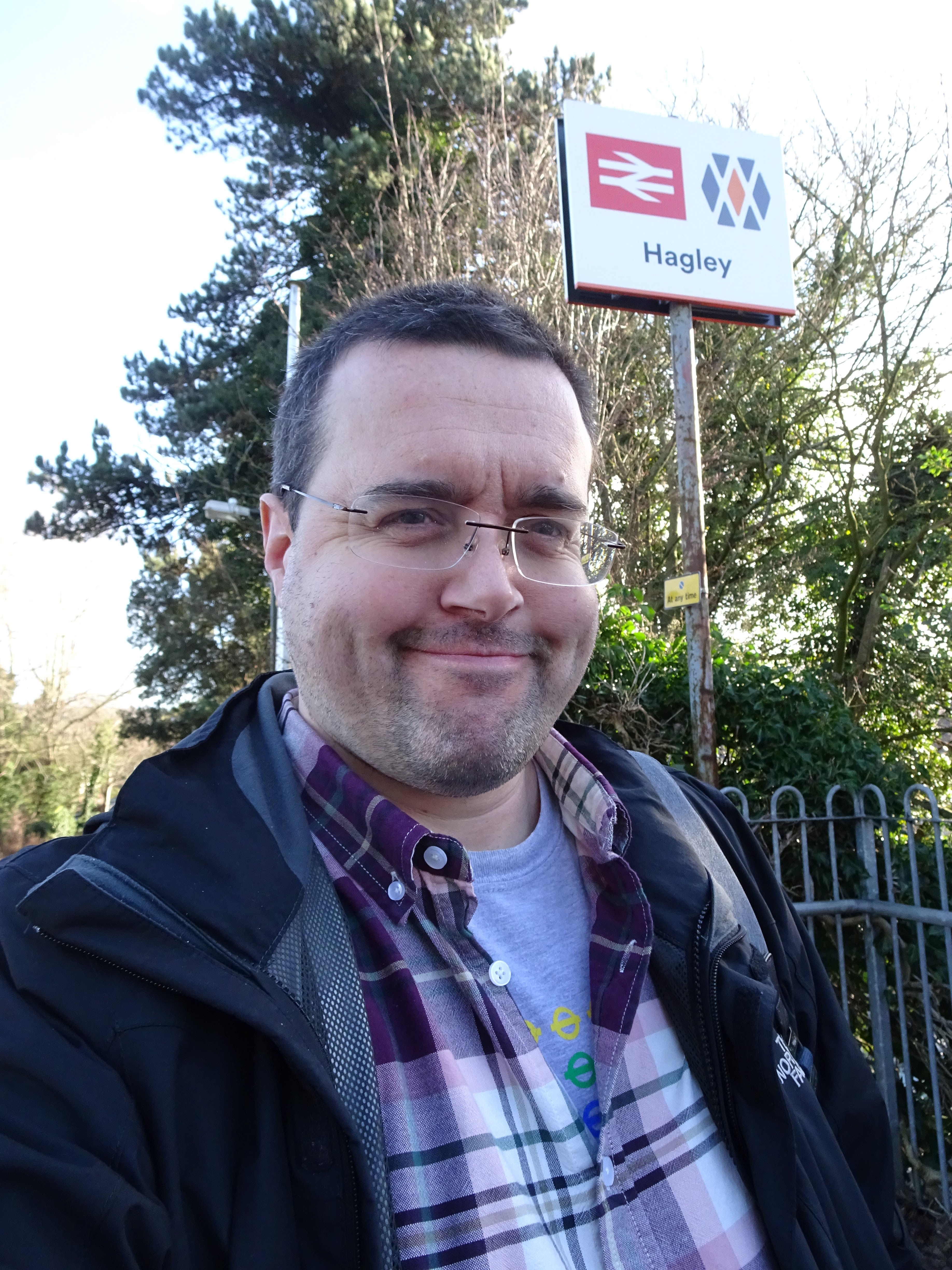
Plus, it takes ages. I finally stepped onto the platform at Hagley a full three hours after I'd arrived at Lime Street.  I could've got to London in that time.  Instead I was in a small village on the edge of Worcestershire.  


On the plus side, it was a nice station, well-kept and tidy.  It had been painted in historic colours and retained a village halt atmosphere.  I left the platform and walked down a row of neat cottages to the main road.  The village's position on the railway to Birmingham means it's prime commuter territory and it felt it.  Self-assured, wealthy but not ostentatious.


I avoided the centre and instead walked straight out of the village.  Brake Lane passes between two schools, the Catholic High School and the local comp.  I can imagine a well-meaning town planner thinking that would be a boon for the community.  They could share facilities!  They could work together!  It would bring them into one unit!  Instead I bet they absolutely hate each other.  I bet the last day of term is marked by ructions, with all the teachers having to line up outside to stop the inevitable fights.  Teenagers love to mark out who is on their side and who isn't, who is in and who is out, and those two schools would have a rivalry that would make Glaswegian football fans quake in fear.  They may as well have built a wall with guard towers and patrolling Alsatians down the middle of the road.


The road petered out into nothing.  Houses thinned, and a cul-de-sac sign appeared to let me know it was a dead end.  A couple walked together, holding hands, and a jogger with shorts over those athletic pants that I'm sure have some sort of highly technical name but I just think of as "tights, but for men".


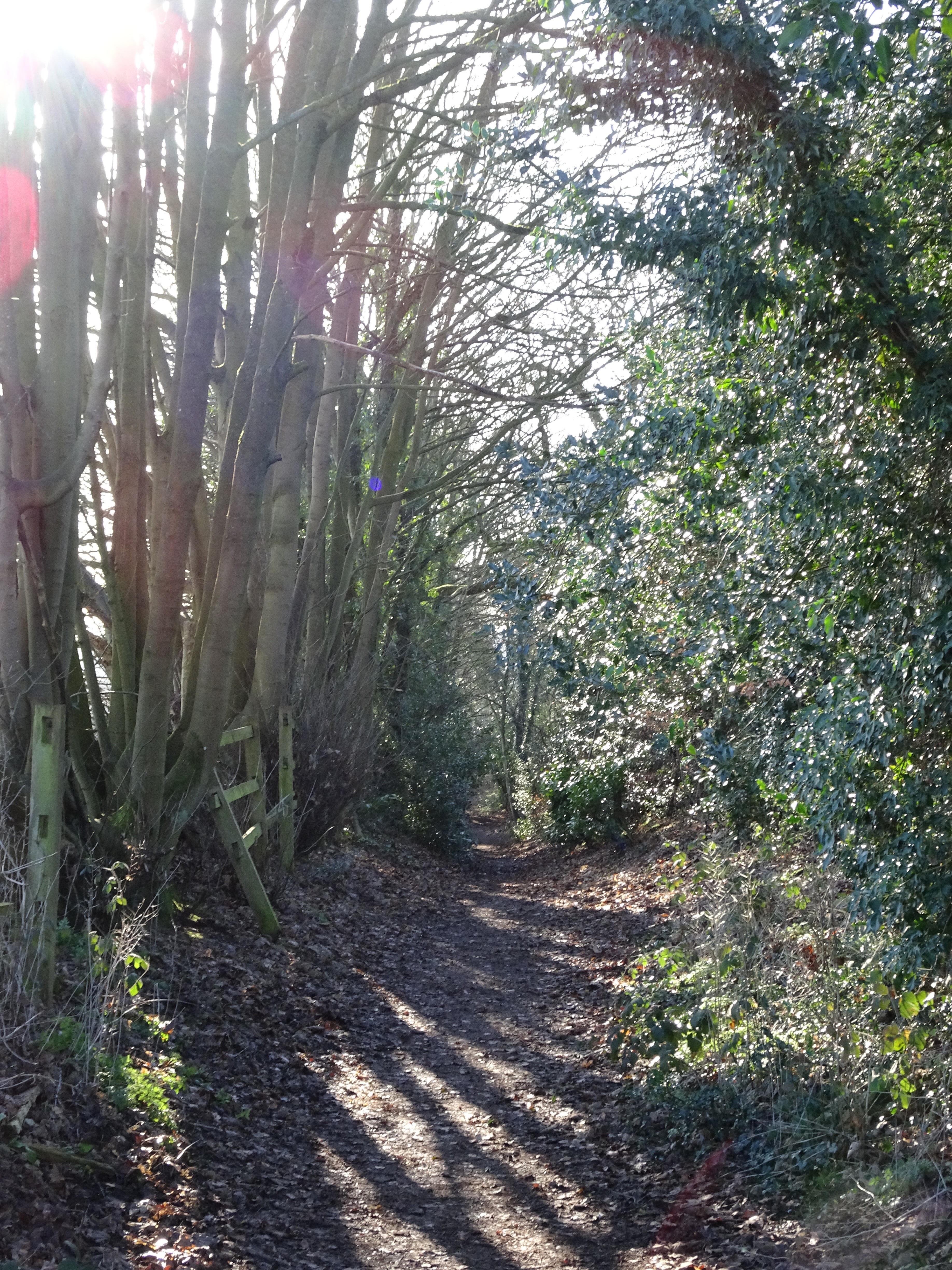
I turned off the road and down a well-trodden footpath running between fields.  This was part of a long distance footpath called "The Monarch's Way", following the route the future Charles II took after he fled the final battle of the Civil War.  He was heading for the coast so he could flee into exile, but at the start, after the Battle of Worcester, he headed north.  I'm guessing he was a bit confused after all the fighting and let's be honest, they didn't have the Ordnance Survey and GPS in those days.  I liked the idea of him turning up in Dudley and trying to hire a boat to France, only to have it politely explained to him that he was several hundred miles off course.  


The sun was as high as it was ever going to get, bright and shining through the trees but not warm.  I hugged my coat close.  Ahead of me were two dog walkers, which annoyed me a little.  I was enjoying the solitude.  I was enjoying striking out across country on my own.  They were slow, too, sauntering along, rather than matching my breakneck pace, and I finally caught up with them at a kissing gate.  The wife smiled at me and apologised if I'd heard them arguing.  "We can't agree on the best way to train the dog," she said.

Her husband hastily added, "It's not our dog," which raised questions I wasn't brave enough to ask.  I imagined they'd had enough for a neighbour's ill-disciplined mutt, and snuck it out every day to try and get a bit of training into it.  I didn't say anything of course, because I am a socially awkward idiot.  Instead I smiled and walked on, round the back of some farmhouses.  There was a wheely bin pen and the owners had put up a sign barring dog owners from putting their bags of mess in them, which seemed a bit tight to me.  Rather that than dangling the bag off a passing tree.  


There was a whistle of air, a rumble of wheels, and then a train appeared, riding back towards Birmingham above the stream on an embankment.  I pressed on, pausing only for a quick pee behind a bush, hoping that those two dog walkers behind hadn't acquired a sudden lick of speed and were going to round the corner and catch me.  


The path was rough and torn up by bikes and horses and dogs but the chill meant I perched on the tops, crunching along, feeling the ruts beneath the soles of my feet.  It was almost a dance, a delicate movement over the surface, hovering.  I hit a proper road and the sudden tarmac felt strange after the path.  Over a bridge, under a railway bridge, and I was on the outskirts of Churchill.  Again, I turned away from the populated parts and disappeared onto a back path.


It's not real hiking.  It's very much the soft handed, suburban version of rambling.  I wasn't striking out across wild countryside, just taking short cuts behind houses and across farmer's land.  But it felt good to do.  I'd been trapped inside for far too long, I realised.  I needed to have a bit of outdoors time.  A bit of solitary walking with nobody else around to interrupt my thoughts.


Of course, in England, you're never far from civilisation, and the trail soon ended up on an A road.  I walked along the side of it while trucks and cars sped by, putting their foot down to enjoy the national speed limit after pootling through a village.


Blakedown arrived quicker than I thought it would, almost sneaking up on me.  The station was tucked down a side road on the edge with a level crossing.  As I arrived, the lights began to flash, and the barriers dropped to allow a northbound train passage.


Blakedown is on the Snow Hill lines, which means you can get a train from here as far as Stratford-upon-Avon.  It also means they have extremely long announcements.  The announcer robot started listing the stations the train called at while it came into the platform, and was still listing them when it was long gone.  If you were headed for The Lakes and didn't know it was a request stop, sorry, that bit was said after you'd already boarded.


I wandered onto the southbound platform.  There were no benches, so I strolled back and forth, chewing on the ham and mustard sandwich I'd bought at Lime Street an age ago.  After the country walk, I was heading into town.